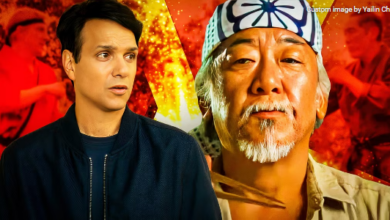
“This Is Not a Cobra Kai Movie”: Jonathan Entwistle Wants You To Know ‘Karate Kid: Legends’ Is Its Own Chapter in the Franchise

The Karate Kid franchise is one of cinema’s most beloved, with the original Robert Mark Kamen martial arts drama becoming staple viewing for a generation. As many franchises do, this unlikely coming-of-age journey seemed to have its day. That is, until a surge in popularity following an unexpected remake, The Karate Kid (2010) starring Jaden Smith and Jackie Chan.
Eight years later, and from the most unlikely of platforms in the long-forgotten YouTube Red, Cobra Kai debuted and breathed new life into the tale of The Karate Kid. Even with Cobra Kai having recently aired its final season, saying goodbye to the dojo with a bittersweet bow, the story is not yet finished. A new feature-length installment, Karate Kid: Legends, is on the way. Against all odds, the newest film is set to tie the original series together with the once-thought-unrelated 2010 remake, with the task placed in the talented hands of director Jonathan Entwistle (The End of the F***king World).
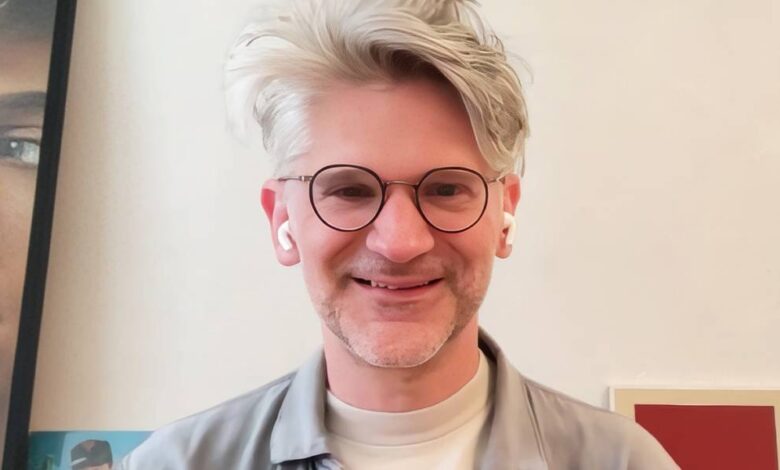
In a conversation with Collider’s Perri Nemiroff, Entwistle discusses the challenges of directing such an important project for generations of fans, especially with this being his feature directorial debut. He also talks about the movie’s connections to the Cobra Kai series, as well as expanding Chan’s role in the movie from the original script, and more.
‘Karate Kid: Legends’ Posed New Challenges for Jonathan Entwistle’s Feature Directorial Debut
“The most important piece of anything theatrical is the audience.”
JONATHAN ENTWISTLE: Well, definitely the most important piece of anything theatrical is the audience. It’s not to say that in television, the audience isn’t equally as important, but there’s something special about the experience with a large group of people in one room. So immediately, from day one, even though some of my shows are technically feature film length in their entirety, this was a very, very different approach. I kind of went into it thinking, “Oh, okay. We’re just going to go in the same way as I’ve done before,” because I felt like I was making movies back in the day when I was making TV shows anyway.
So, I arrived on set with my single camera, “Let’s go!” It wasn’t a huge learning curve in the physical approach to it, but it was actually in the delivering of the movie and in the exhibition of it. The theatrical version, the “popcorn element,” basically, is something that is almost impossible to kind of say exactly what it is, but when you sit in this, specifically with this movie, things that wouldn’t work in television absolutely work on the big screen for everybody in the room.
Can you give me a specific example of something that wouldn’t work for television, but would work on the big screen that everyone can look out for in this finished film?

Across the board, you have an exceptional eye for casting. There are so many people that I’ve been following since the beginning of their careers because your shows introduced me to them. I know that all of these roles are quite different, but are there any shared qualities that you see in your leads across all your projects that signal to you, “Not only will you be good for the role, but you’ll also be good for the way I like to collaborate as a leader on set?”
ENTWISTLE: Well, I think it’s a little bit of both. I am a firm believer in “there’s no such thing as bad acting, just bad casting.” I really believe that. “The right actor for the right role” is perhaps the better way to say that. But I do think that, as a director, I really, really enjoy the craft of what actors do. For me, what I need is someone who knows their lines and shows up with their own thoughts about it and delivers. That helps me with my overall tonal approach to everything.
Jackie Chan’s Role Grew from Script to Screen in ‘Karate Kid: Legends’
“I’ll call it the “Jackie Channess” of the movie.”

I want to dig into the story now. I always love hearing about how things can evolve along the way through every single phase of the filmmaking process. Can you tell me the biggest difference between draft one of this screenplay and the finished film everyone’s going to get in theaters?
We’ve had different iterations of the tournament. What’s the tournament? How does it work? And in the end, we were like, “Let’s go for the big finale. Let’s bring everything together with the cool finale and kind of work our way.” We’ve seen the tournaments, Cobra Kai‘s endless tournament, and the original Karate Kids culminate in the tournament. With this, we were like, “Well, we know there’s a tournament. We’re all in. We love this,” and there’s some sweet martial arts in the tournament sequence, but I was like, “Let’s get to the end. Let’s go Lord of the Rings on the end and have a real battle on top of the mountain.” That was my approach to that.
Entwistle Confirms There Are Distinct Differences Between ‘Karate Kid: Legends’ and ‘Cobra Kai’
“This is not a Cobra Kai movie.”
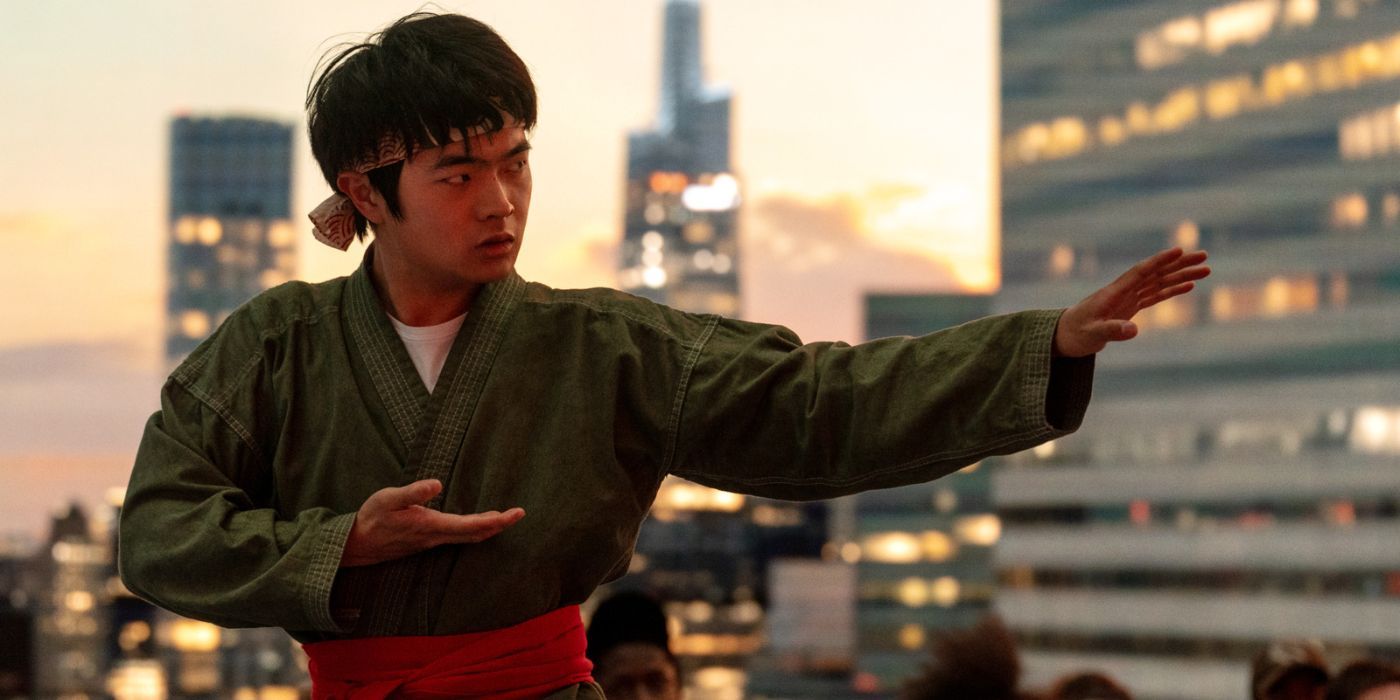
You just brought up Cobra Kai, so I’ll go there because it’s an interesting situation where that show wrapped up so soon before your movie is hitting theaters. I’m curious to hear a little bit about the experience of figuring out how much your movie should connect to that, and feel like it naturally flows from that to your story, and how much you wanted your movie to stand on its own two feet and work for people who have never seen an episode of Cobra Kai.
There are many, many seasons of Cobra Kai. This is not a Cobra Kai movie. It’s within the Karate Kid universe, and it’s got threads of homage to the absolute huge success that that show was for the franchise, but it’s the next piece. Just like Cobra Kai was the next piece to the movies, this is the next piece to the overall franchise. It’s another chapter in the story. It’s another graphic novel in the sequence.
To play with this idea for fun, if you could direct one scene between Li and a character from Cobra Kai, who would you choose, and how might their interaction go?
Here’s another character in your movie that I was really eager to ask about. Just tell me absolutely everything about figuring out how to incorporate Wyatt [Oleff] in this film, because I think he might have been one of the biggest surprises for me.
ENTWISTLE: Yeah, exactly. Look, I wrote the character specifically for Wyatt. We were toying with this idea of, like, who helps Li? Who is that kind of, not the sidekick, but the sidekick, in there, and how could that work? I was like, “I know Wyatt’s going to deliver because I’ve worked with him many times.” I was like, “What’s the New York version of the classic sidekick?” And I was like, “Okay, let’s go and build this Alan Fetterman character that can kind of help Li along the way, be the comic relief. And honestly, when we first started to show people the movie, people were like, “Oh my god, Alan is my favorite character!” And he really leaned into that. So, he’s always a pleasure. He’s a real star. And he’s a very, very interesting guy. He can go between all these different characters, but I’m sure he’s annoyed that I always make him play kind of the same character. He’s played so many Stanleys that I almost called him Stanley again. That would have been fun.