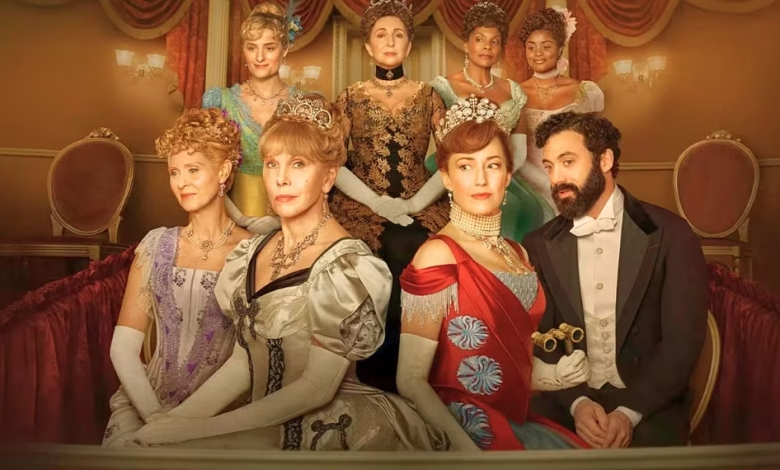
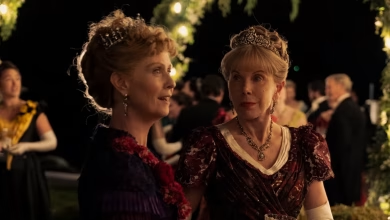
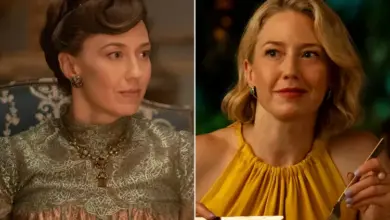
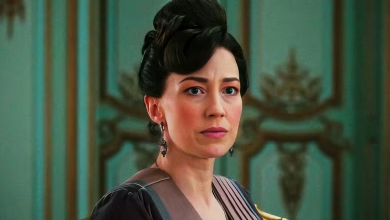
The Gilded Agehas a wide variety of characters, from the idealistic Marian (Louisa Jacobson), to the determined and ambitious Bertha (Carrie Coon), as well as the stubborn, stuck-up Agnes (Christine Baranski). Yet one of the series’ most interesting additions is Peggy (Denée Benton), the hardworking, aspiring writer who forms an unlikely friendship with Marian. Not only is she a woman with big ambitions, but she has also provided a window into a different world, allowing the show to explore the racial inequality of the time. Her family is well-off — her father, Arthur (John Douglas Thompson), owns his business, and they are respected in their community, but they are not welcomed in New York’s social scene because of their race. By having a lead character who is not white, The Gilded Age handles the topic of racism more consistently than Julian Fellowes‘ other series, Downton Abbey, yet something has been missing from Peggy’s story.
Peggy has done a lot across The Gilded Age‘s first two seasons, but her storylines have been distinctly more somber in comparison to other characters of a similar age. Gladys’ (Taissa Farmiga) lack of control over her own future and Marian’s unlucky romantic past have certainly played out, but Peggy’s stories have been more tragic and frightening, at least until now. Season 3 is finally giving Peggy the romance she deserves, and it’s about time.
Peggy Has Experienced Unique Struggles in ‘The Gilded Age’
Image via HBO
In the first two seasons of The Gilded Age, Peggy hasn’t had it easy, sitting at the center of some of the show’s most serious storylines. She initially struggles to get her stories published, but eventually finds a job writing for a paper. Season 2 takes her to Tuskegee, Alabama, where she experiences the horrors of racism firsthand, hiding from an angry mob. It’s one of the most tense moments in the series, but it isn’t the only example of Peggy’s activism. She also stands up against discrimination in the New York schools, which isn’t as harrowing but no less serious.
Peggy has also earned more personal storylines as well, which reveal how much more worldly experience she has compared to other women of her generation. When she searches for information on the baby boy she believes she lost, she ultimately discovers that her father lied to her and sent her son away. Before she can track down her son, he falls ill and passes away. To add to Peggy’s often sad story is that her only on-screen romance to date has been brief and with a married man. She and her newspaper editor, T. Thomas Fortune (Sullivan Jones), become intimate, but Peggy distances herself from him after seeing his wife and child, resulting in heartbreak for her. While the show has made Peggy and her experiences compelling, it has not given her the more romantic stories that The Gilded Age thrives on until now.
Peggy Finally Gets the Love Story She Deserves in ‘The Gilded Age’ Season 3
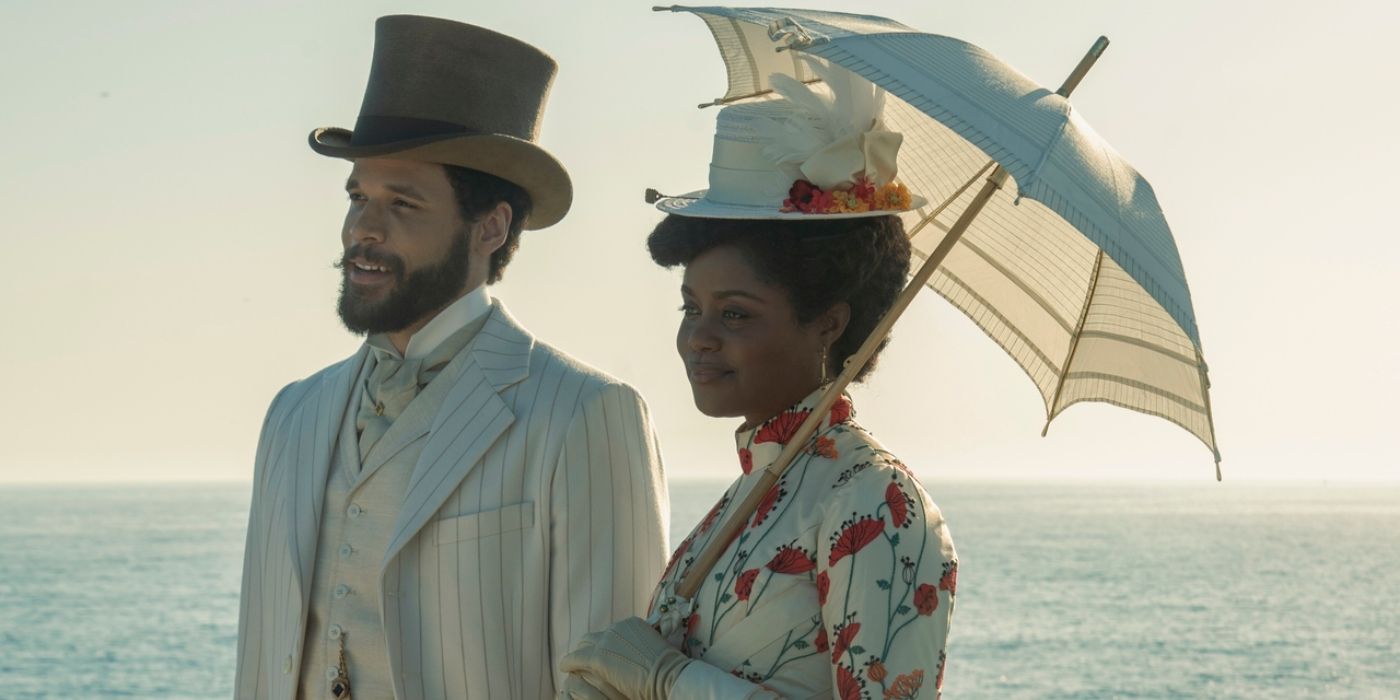
While Peggy is a self-proclaimed career woman, she shouldn’t have to sacrifice romance in the process, and Season 3 finally addresses that by giving her a much happier storyline. Only three episodes in, Peggy has not only earned the opportunity to publish excerpts from her new novel, but she also meets a new love interest in Dr. William Kirkland (Jordan Donica). The character is first introduced in Episode 2, “What the Papers Say,” when Peggy is ill. Dr. Kirkland not only treats her, but he also shows interest in her work-in-progress novel. However, their relationship develops a new spark in Episode 3, “Love Is Never Easy,” when Peggy receives a letter from Dr. Kirkland while staying in Newport with her family. Her mother, Dorothy (Audra McDonald), and cousin Athena (Jessica Frances Dukes) are quick to suspect a courtship, and with him being a doctor from a prominent family, they are understandably excited for her.
Though she is cautious, Peggy meets Kirkland, going for a walk on the cliffs, and it’s no great mystery that The Gilded Age is setting them up for a romance. Kirkland’s courtship is exactly the kind of storyline that Peggy has been missing, giving her a romantic entanglement along the same lines as Marian and Larry (Harry Richardson). Though they haven’t spent much time together yet, Kirkland invites Peggy and her family to a party his parents are hosting, making his interest perfectly clear. With Kirkland, Peggy is finally getting the love story she’s needed for a long time.
‘The Gilded Age’ Still Isn’t Making It Easy for Peggy
Image via HBO
Like any good drama, whether historical or not, a new relationship cannot be without its problems — and in Peggy and William’s case, that is his mother, Mrs. Elizabeth Kirkland (Phylicia Rashad). She is a proud woman and holds a high rank in Newport’s Black community, but she is as prejudiced as any of the old-money crowd. At the party, Mrs. Kirkland meets Arthur and instantly dislikes him because of his past as a slave. As if that isn’t bad enough, Arthur and Dorothy overhear Mrs. Kirkland complaining about her light-skinned grandchildren getting darker in the sun, showing how deep her bigotry runs.
William has shown no signs of sharing his mother’s views and has been vocal in his respect for Arthur’s work. Still, his mother’s behavior presents a major obstacle to William’s romance with Peggy. Understandably, Arthur and Dorothy are worried about how Mrs. Kirkland would treat Peggy if she and William were to get married. It’s a valid, if somewhat premature, concern that will certainly impact the next step of the story. While the nature of Mrs. Kirland’s prejudice precludes the storyline from being strictly fluff, Peggy’s love story finally positions her in equal regard among the other characters, incorporating the societal and romantic drama that The Gilded Age does so well.