I like to escape today’s troubles by watching reruns of ‘Leave It to Beaver’ and ‘The Dick Van Dyke Show’
Beaver Cleaver is in trouble. His neighbor’s cat came back to the Cleavers’ house in the middle of the night after Beaver fed him some salmon — and Beaver doesn’t want his parents to find out. His big brother, Wally, finally snagged a date with the prettiest girl at school, but once she joins the Cleavers for a lakeside picnic, it’s obvious she’s extremely superficial. Wally is disillusioned, but wiser for the experience.
A former mentor of Rob Petrie’s, head comedy writer for “The Alan Brady Show,” runs into Rob and seems down and out. Rob offers him a chance to write for his show, but his co-writers Buddy and Sally, are less than supportive. Rob’s wife, Laura, fills in for one of the dancers on the show, to rave reviews. She’s offered the job, but decides she’s happier tending to Rob, their home and their young son Ritchie. While tempted, Laura passes on the opportunity, preserving the family dynamic.
With so many problems now facing the world (where do I even begin?), it’s calming to slip back into an earlier era — and just sit back and decompress.
These kinds of scenarios were the heart and soul of “Leave It to Beaver” and “The Dick Van Dyke Show” — two popular sitcoms I grew up watching in suburban New Jersey. While I loved them as a kid, I enjoy the shows today for the simpler, more innocent times they portray. With so many problems now facing the world (where do I even begin?), it’s calming to slip back into an earlier era — and just sit back and decompress.

“Leave It to Beaver” began as a tele-play before becoming a popular series, running for six years, beginning in 1957. Each season consisted of an astounding 39 episodes, for a total of 269. If you’d like to head down memory lane and visit the Cleavers’ fictional town of Mayfield, rest assured there’s plenty to see.
Positive Parenting
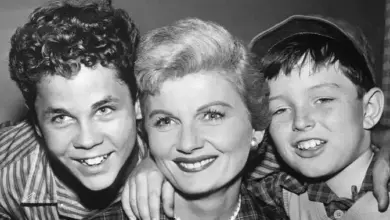
When the show began, Beaver was in second grade. His handsome older brother was in eighth grade, facing pre-teen concerns while Beaver looked on with a bit of awe and a bit of disgust — girls, yuck! With his flannel shirts and baseball caps, freckled little Beaver was as cute as they come. His gang of friends consisted of Whitey, Gilbert and the plus-sized Larry Mondello. Beaver’s teachers were kind, young and impeccably dressed, reminiscent of some teachers I fondly remember from the same era.
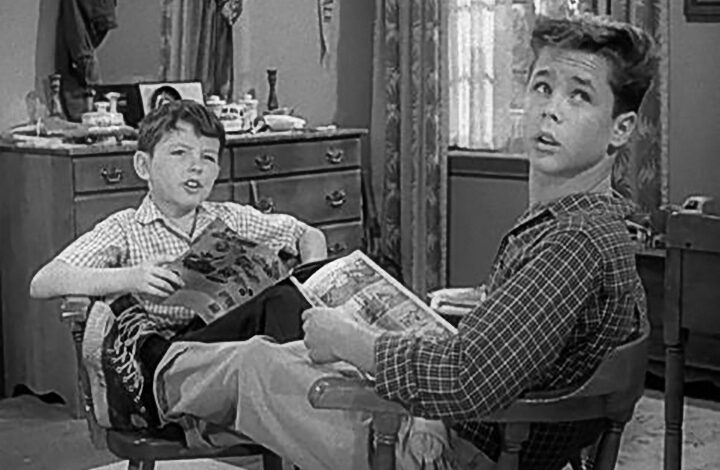
Always age-appropriate, the themes involved school mishaps, issues with authority, first jobs and friends like Wally’s perennial bestie, the ever-devious Eddie Haskell. Clarence “Lumpy” Rutherford rounded out Wally’s crew, navigating life with a chastising father he could never satisfy. Wally, being six years older than Beaver (coincidentally, the same age spread as my two sons) faced more grown-up social situations involving girls, dates and parties. With Ward’s guidance and Wally’s innate goodness, he wisely negotiated each challenge, even when friends tried to lead him astray. Eventually, Beaver also stepped into early teen territory — and Wally kindly eased the way.
While the show is sometimes considered lightweight, it handled some sensitive topics for its times.
While the show is sometimes considered lightweight, it handled some sensitive topics for its times. In Season 2, an episode called “Beaver and Chuey” explores the complexities faced when Beaver makes a friend from South America who doesn’t speak any English. “Beaver’s House Guest” in Season 4 explores divorce. Chopper, Beaver’s camp friend arrives bearing extravagant gifts from both sets of divorced parents, while bragging about all the loot he regularly receives. Over the weekend, it’s revealed that his friend’s fragmented life isn’t the picnic Beaver imagines.
While it does paint a sad picture of divorce, the episode broaches the topic in a time when it was taboo, especially on a TV sitcom. “I never knew anyone with two sets of parents before,” Beaver says. Suddenly he did — and so did the rest of the 1950s audience.
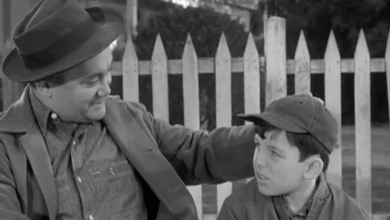
Ward and June Cleaver can be laughed at today (June vacuums in a fancy dress, high heels and pearls and Ward spends his free time waxing the car, raking the lawn and clipping the hedges), but they were actually very good parents. On rare occasions, I felt Ward was a little too hard on his sons, but for the most part, he was accessible, easy to talk to and didn’t overreact. June was more reactive, but with Ward’s helping hand, she competently guided the boys in a good direction.
A Cool Couple
Just as “Leave It to Beaver” exemplified the ’50s, “The Dick Van Dyke Show” was born in the almost swinging ’60s. Created by Carl Reiner, its 156 episodes were produced between 1961 and 1966. Rob and Laura Petrie’s mid-century ranch house in New Rochelle, New York had flair. I live in the town next to New Rochelle, and I’m always surprised how many people know of it from the show.
While Ward and June Cleaver were staid and traditional, Rob and Laura Petrie were cool. Rob, the head writer for a hit TV show, had some celebrity cred. Laura, a former dancer, had the look of Jackie Kennedy. With her slim figure, capri pants and form-fitting sheath dresses, she appealed to both women and men. Young and lively, she saw Rob through various office crises and concerns with friends, neighbors and occasionally with Ritchie. The Cleavers were only concerned with Beaver and Wally, but the Petries had their own lives around which most of the episodes centered. Still, they were loving parents to Ritchie, often getting a kick out of his cute little antics.
When bad news weighs on me, I take a short vacation to Mayfield or New Rochelle, feeling like a kid again in front of my living room TV.
Lovable, slightly goofy Rob possessed a good-natured way of handling everyone from his co-writers Buddy Sorrell and Sally Rogers (an early TV career woman who didn’t take any crap), his famously bald boss Mel Cooley and the sometimes-overwrought Laura. Surprisingly serious topics such as sexual harassment and marriage counseling made their way into some of the episodes, but no matter what transpired, it was resolved with a smile and no lasting harm. Not so realistic, perhaps, but comforting, nonetheless.
Whether it’s the old-fashioned values of the Cleavers or the witty ways of the Petries, when bad news weighs on me, I take a short vacation to Mayfield or New Rochelle, feeling like a kid again in front of my living room TV.