Amazon is stubbornly sticking by The Rings of Power long after Netflix or any other studio would have pulled the plug. Since launching in 2022, excitement for the show has faded as the vibe around the billion-dollar streaming spectacle has bounced from all the stages of grief: denial, rage, to a kind of acceptance. Jennifer Salke of Amazon Studios TV and film department is gone, but Amazon appears shackled to a show that hasn’t justified its staggering price tag and likely never will. This is about more than Nielsen ratings.
Sometimes the Numbers Do Lie

The Rings of Powers Season 2 paints the picture of a show on an irreversible trajectory. “Sometimes they wear out their welcome,” Variety Intelligence Platform Chief Media Analyst Andrew Wallenstein stated in a Luminate event last year, discussing the data behind the drop-off. At 16 total episodes in two seasons, the fantasy origin story’s budget dwarfs the much smaller $230 million that Disney allotted for The Acolyte, which only ran for eight episodes, per a Forbes report.
“We Were Always Going to Spend What We Needed to Spend to Get It Right.”

We know you’re wondering where that billion dollars went. As part of a $250 million dollar deal brokered with Tolkien’s heirs, Amazon’s Prime Video streaming service won exclusive rights. Yet it faces a “kill fee” of $20 million per canceled season. Five seasons were agreed to by Amazon and the Tolkien estate. Meaning that the zombie project cannot easily be killed. Failure was never an option, as Salke publicly stated prematurely in 2022 before departing. Her attitude was contagious, as even some experienced journalists assumed that big early numbers meant the show was destined to be a hit, and a flagship program. At the time, she explained to Variety, that the show, much like Game of Thrones, required sprawling, expensive sets fit for use over multiple seasons:
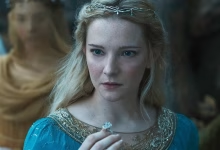
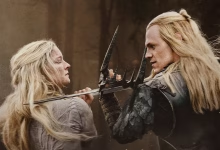
“We’re building infrastructure for five seasons. We’re building a small city. We were always going to spend what we needed to spend to get it right. I’m fortunate to be working at this company where we want to be financially disciplined, but nobody wanted to compromise on what this would be visually.”
The CGI green screen backgrounds that George Lucas made famous in the Star Wars prequels simply weren’t good enough. The digital look was stylistically too stilted, we are to assume, rejected by Amazon’s big shots, who thought this show could be a pillar of their streaming empire. They spared no expense in order to craft a premium product to draw in new subscribers. Was the production value really worth it? You decide. Regardless, Amazon is sticking with it despite the ratings drop that saw only about 40% of subscribers finish the inaugural season, alienating the LotR fanbase, according to data provided by The Hollywood Reporter.
Some Streamers Never Learn

Should this wasteful cycle sound reckless, throwing good money after bad, it’s not unprecedented. But there is a caveat. Bezos is only copying Netflix’s homework, and no one has seen more red ink on the balance sheets when it comes to developing dead franchises than Netflix. The Rings of Power is Amazon’s Electric State for all intents and purposes. The main difference being, Netflix walks away from their mistakes and doesn’t look back.