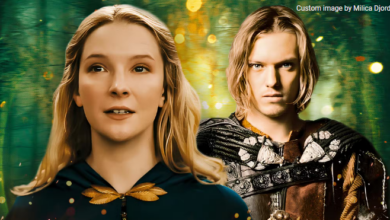
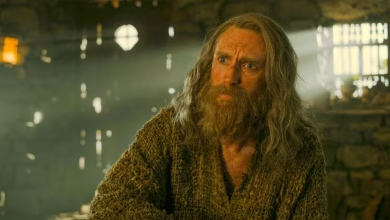
Amazon’s The Rings of Power had a tough first season, what with the endless bricks thrown at the show’s many inconsistencies. Some of the arguments had proper points to make, criticizing elements such as the compressed timeline, inexplicable character arcs, and strange twists. On the other hand, the show also suffered from complaints about casting POC characters, leading to vote brigading and a false reduction in Season 1’s audience score. And yet, Rings of Power narratively succeeded by reflecting the progressiveness of the 21st century instead of Tolkien’s era.
Although The Lord of the Ringsfailed its female characters by making all of them unquestionably secondary to the men, The Rings of Power has done the opposite. Women have always been in positions of power, historically erased for their contributions by society’s patriarchal standards. As such, it’s refreshing to live in a time where women are considered equal to men, especially when reality matches the fiction we consume. Tolkien was a genius writer and scholar, but he wrote within the confines of his own perceptions. For all of its own faults, The Rings of Power has only been attempting to fix that mistake.
The Lord of the Rings Featured Truncated Character Arcs for Women
Image via New Line Cinema
J.R.R. Tolkien was deeply in love with his wife Edith, on whom he based the character of Lúthien Tinúviel. Lúthien was easily one of the greatest heroes that Middle-earth had ever seen, effectively changing the course of the First Age with feats far beyond the scope of any character in The Lord of the Rings. When her paramour Beren went on the perilous quest to secure the Silmarils from Morgoth, he was captured and incarcerated by the Dark Lord. Rather than wring her hands helplessly and wait for one of the male characters to rescue Beren, Lúthien took it upon herself to complete the mission. With Huan the Hound by her side, she managed to defeat Sauron before casting a spell of such sleep-inducing power that even Morgoth was helpless against it. And when Beren later died of his injuries, Lúthien sacrificed her Elven immortality to share a mortal life with her beloved.
Lúthien’s existence is proof that Tolkien considered women to be as powerful and influential as any man in Middle-earth or beyond; unfortunately, this did not extend to The Lord of the Rings. Arwen Evenstar, Lúthien’s great-granddaughter, had an extremely small role in the main text. Her journey was largely framed through the perspectives of male characters, making Arwen a symbol of her father Elrond’s grief and her lover Aragorn’s hope. Like Lúthien, Arwen would also choose a life of mortality for her husband, but she’s more of a reward for Aragorn’s victory than a person with her own hopes and dreams. Similarly, Arwen’s maternal grandmother, Galadriel, has the power to change the world but refuses to do so. Instead, Galadriel becomes a mentor figure and gift-giver, pedestalized by the Fellowship for her grand beauty and wisdom.
Hardcore fans cite Éowyn as an example of a powerful female character in The Lord of the Rings, an accurate assessment for the most part. She burns through the battlefield with the ferocity of a true warrior, defeating and killing the strongest villain after Sauron: the Witch-king of Angmar. Éowyn’s rebellion was genuinely inspiring, reflecting countless real-world female fighters who disguised themselves as men in order to secure their ambitions. While killing the Witch-king shattered gender norms, Éowyn’s story was resolved by her marriage to Faramir. It almost felt as though Tolkien wanted to re-establish patriarchal equilibrium by painting Éowyn’s heroism as exceptional but temporary; despite her repeated claims of being a shieldmaiden, she ultimately announced her retirement from war and her new preference for healing.
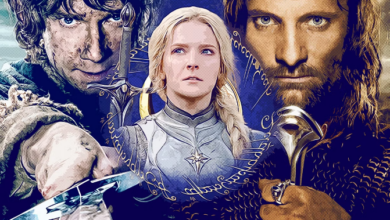
None of these character arcs were problematic by themselves, perhaps explaining why Peter Jackson mostly retained them in the film trilogy. Jackson even elevated Arwen by briefly showcasing her as a potential warrior; the scene in which she rescues Frodo clearly underscores her bravery and strength. At the same time, Jackson exempted seminal female characters from the books, the most notable being Ioreth. As a representation of folk wisdom, Ioreth was among the first Gondorians to recognize Aragorn as the once and future king. Another missing character was Goldberry, whose removal was tied to the exclusion of Tom Bombadil from The Lord of the Rings trilogy. Meanwhile, Rosie Cotton and Lobelia Sackville-Baggins don’t even have a single line in the movies. All things considered, Jackson continued the trend of female minimization set by Tolkien. And throwing Tauriel into The Hobbit trilogy made very little difference.
The Rings of Power Offers a Stronger Diversity of Female Characters
Image via Amazon Prime Video
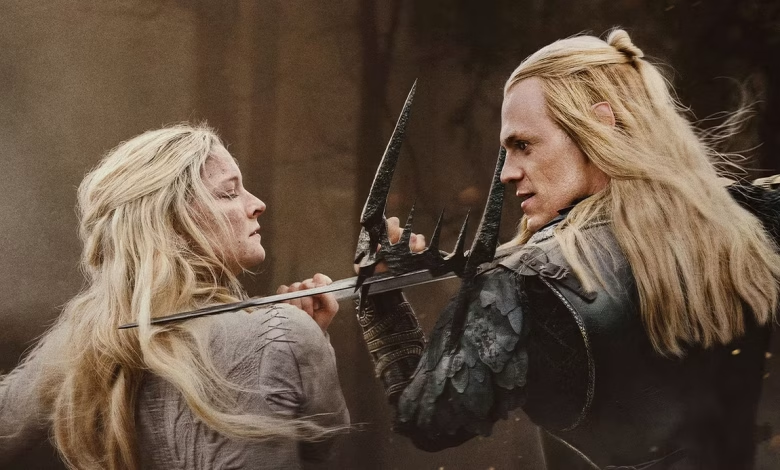
The Rings of Power was widely anticipated by the LOTR fandom, especially with the unprecedented production budget at its disposal. The series quickly stood out from previous adaptations by centering numerous girls and women, effectively making them main characters. The Rings of Power severely modified Galadriel’s character arc, transforming her younger version into a violent warrior and one of the strongest characters in the series. While Tolkien’s works don’t show Galadriel fighting, the author demonstrated her youthful fierceness, which was subsequently used as a framework for the show’s warrior Galadriel. Although she never canonically took part in any of the hunts for Sauron, this character change made complete sense in context. With the responsibility of the disastrous First Age partly on her shoulders, Galadriel naturally wanted to help restore Middle-earth by any means necessary.
On the other hand, Míriel of Númenor was around during the events of The Rings of Power, but her arc evolved enormously in the show. She is directly responsible for slowing the inevitable Fall of Númenor, whether by proving her value as a leader or risking her own life to save Elendil. Míriel’s blindness in Season 2 does hinder her goals to a point, but she still manages to rise above her limitations and showcase her brilliant potential. The Rings of Power did another excellent job by bringing female Dwarves into the picture for the first time. Arguably named after Dís, the sister of Thorin Oakenshield and the only named female Dwarf in Tolkien’s writings, Princess Disa of Khazad-dûm was a breath of fresh air for the franchise. Disa is far more than a token character; she’s personally involved in the sociopolitics of Khazad-dûm, a gentle yet potent voice rising above the fray of Dwarven machismo.
The race of Men, whose very name implies a patriarchal perspective, was represented by the characters of Bronwyn and Eärien, neither of whom was canonical. And yet, both of them demonstrated the power of womanhood in a world otherwise dominated by men. As a single mother, Bronwyn could have spent all her attentions on protecting her son Theo, but she also participates in the battles against Adar’s army. Bronwyn’s potential romance with the Elf Arondir was an interesting subplot, subverting the implicit boundaries between the races of Middle-earth, but it was brutally cut short by her death. That said, Eärien’s character arc is still ongoing, with her role underscoring the agency of women above and beyond mere fighting. And she’s not even the only villainous woman in The Rings of Power, as demonstrated by the all-female triad of Mystics.
One of the chief complaints about The Rings of Power criticized the introduction of the Hobbits, or Hobbit-like Harfoots, who most likely didn’t exist before the Third Age. Thankfully, fans didn’t get another dose of Frodo and Sam in the series. The Stranger, later revealed to be Gandalf, befriended a young Hobbit girl named Elanor “Nori” Brandyfoot, whose presence effectively compensated for the lack of meaningful female Hobbit characters in Jackson’s trilogies. And it wasn’t just Nori, Season 2 brought Poppy Proudfellow into the thick of the action, with the two Hobbits sharing a dynamic that furthered the storyline in uniquely fascinating ways. The characters of Galadriel, Nori, Eärien, Bronwyn, Disa, Míriel, and Poppy are signs of progress, offering female fans the opportunity to see themselves in one of the greatest works of high fantasy.
Canon Isn’t Absolute When It Comes to Retrofitted Casting Choices
Image via Amazon Prime Video
The most vocal argument against the changes made by Peter Jackson’s adaptations revolves around purist perspectives, hardcore Tolkien fans who refuse to see their favorite story transformed into something even slightly different from the original. In fact, early reports on The Lord of the Rings trilogy had a few fans vocally furious about Jackson’s decision to portray Arwen as “riding hell-for-leather” while “wielding a sword, slaughtering orcs at the Battle of Helm’s Deep.” A 2001 Wired article explained some of the animosity fans had toward Liv Tyler, claiming that the actress couldn’t possibly depict Arwen’s “Elven, demure” nature; they even began calling her Xenarwen, a reference to Xena that ironically made Arwen sound even cooler. A petition on Tolkien Online begged the director “not to violate the integrity of Tolkien’s work,” and the resulting 16,000 signatures presumably convinced Jackson to abandon his inventive changes.
And that’s the biggest issue with fandom reactions to adaptations of their favorite stories. Some fans are unwilling to make a single alteration, even those that elevate the narrative. That’s not how adaptations work, though. Tolkien’s writings are unquestionably the most important source of information about his created world and characters, but the movies weren’t beholden to scrupulously replicate every single detail. The Rings of Power is airing in the 2020s, so it would be artistically disingenuous for the creators not to keep up with the world as it is today. The female characters in The Rings of Power have obvious flaws; fans can always criticize their acting and their roles, but wanting them to be overshadowed by male characters is a pipe dream that belongs in the 1950s. Canon is extremely important, but only so long as it doesn’t minimize the art of storytelling. And The Rings of Power Season 2 proved that the show is finally learning to master its new world.