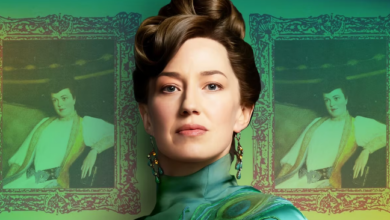
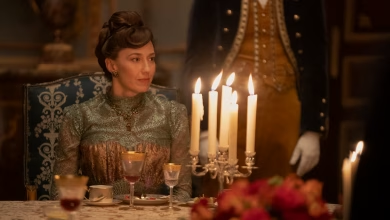
After Gladys’ Heartbreaking Wedding, ‘The Gilded Age’s Strongest Relationship Is Dangerously on the Rocks

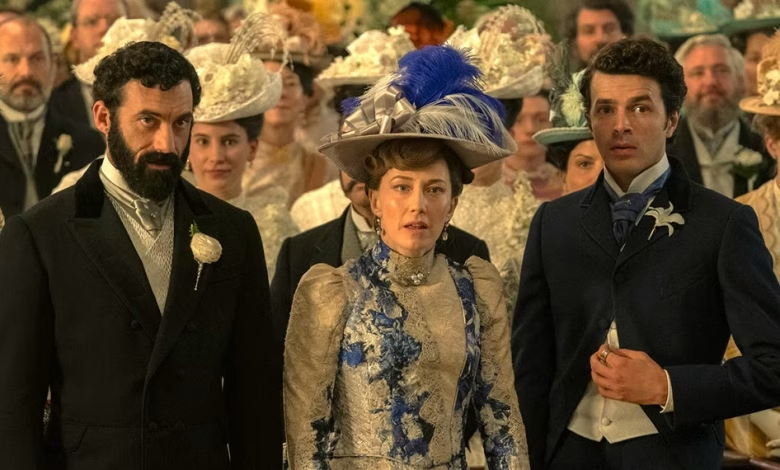
Since the beginning of the series, the couple has appeared to be an oddity in terms of healthy relationships. Starting from humble beginnings, their happiness as husband and wife was built on authenticity. Bertha comes from a line of farmers and appears embarrassed and ashamed of her previous life, while the patriarch of the Russell clan is a self-made railroad tycoon. In a time and social class where appearances matter more than truth, Bertha is relentless in hiding what truly unfolds behind closed doors.
The Russells Come From Humble Beginnings
Bertha’s ambition comes from her simple beginnings and growing up in a family of farmers. This origin was even weaponized against Bertha, notably when Anne Morris (Katie Finneran) cruelly labeled her a “potato digger” in Season 1. Bertha’s storied past is a feat in itself to keep hidden from the socialites of 61st Street. Embarrassed and ashamed of her history, this is made even more clear when Bertha’s sister, Monica O’Brien (Merritt Wever), pays the family a visit in Season 3, Episode 4. Bertha’s less-than-warm welcome is an attempt to hide her sister from her new life as she represents everything Bertha has tried to suppress.
A ruthless railroad tycoon, George is a self-made businessman. Often seen as a cut-throat entrepreneur, he and Bertha both started from the bottom and climbed their way to the top together. While George is often focused on his empire, he leaves the family’s social standing to his wife. An understanding George is learning the hard way might be a mistake, as it is now negatively impacting his relationship with his children.
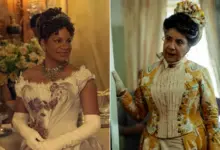
This rings true in Season 3, Episode 5, when George’s son, Larry (Harry Richardson), proposes to Marian Brook (Louisa Jacobson). When the eldest child of the Russell family shares his news, Bertha is quick to comment. Caught completely off guard, she makes it clear she is displeased by the engagement while, on the other hand, George is supportive. The announcement comes on the heels of the fallout from Gladys’s (Taissa Farmiga) unhappy marriage, adding to the mounting tension in Bertha and George’s relationship.
Is George and Bertha’s Marriage in Trouble on ‘The Gilded Age’?
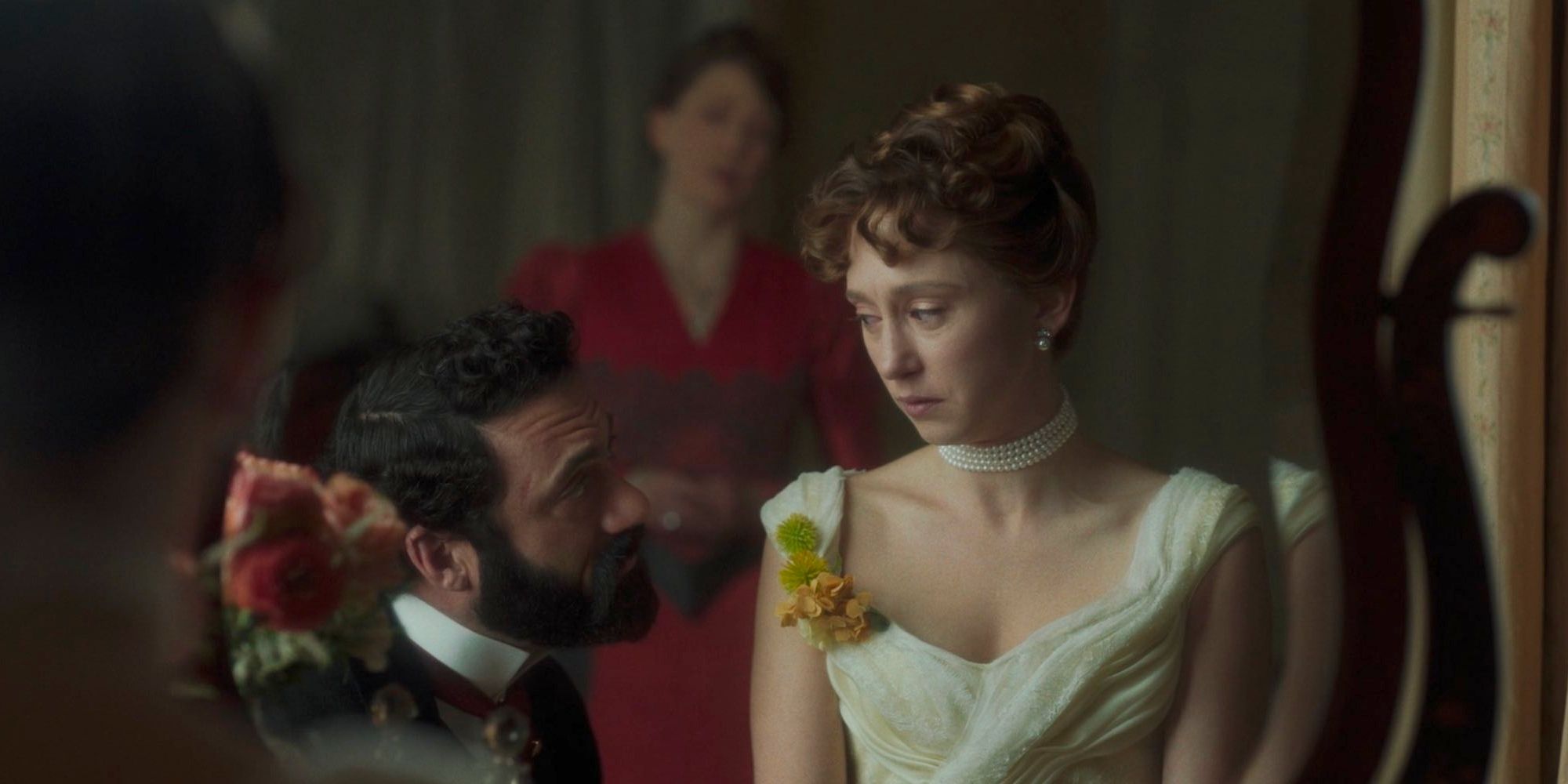
George made a promise to Gladys that she could marry for love, a belief he once shared with his wife. At a time when marriages were transactional, Bertha and George share a rare and genuine love for each other. It’s the same love Gladys thought she had with Billy Carlton (Matt Walker) — that is, until Bertha scared him off in an attempt to make her daughter a duchess, desperately concocting a plan to marry her off to Hector, the Duke of Buckingham (Ben Lamb). Despite Gladys being extremely unhappy with her plan, Bertha’s plot eventually unfolds in her favor, but at a price: her marriage.
What was once a refreshing take on a husband and wife, Bertha and George are quickly becoming a different couple from the one we once knew. With them, we are often shown a rare side to marriage for the 1800s. They are seen as being affectionate towards each other and often share tender moments of mutual devotion. However, the repercussions of Bertha’s ploy to further advance her family’s stance in society have forced George to be a pawn in her plan.
Gladys now finds herself alone in a foreign country. Writing to her father expressing her unhappiness does nothing but fan the flames of George’s fury. Angry he went along with the matrimony despite knowing how unhappy his daughter was, there is seemingly nothing Bertha can do to earn back his trust. With the events that unfolded, Bertha could never have dreamed this for her family in their early days. Those same early days when she and George were genuinely happy.