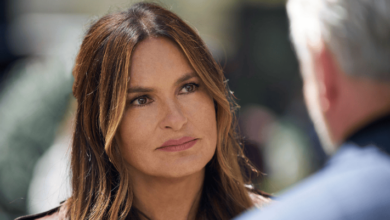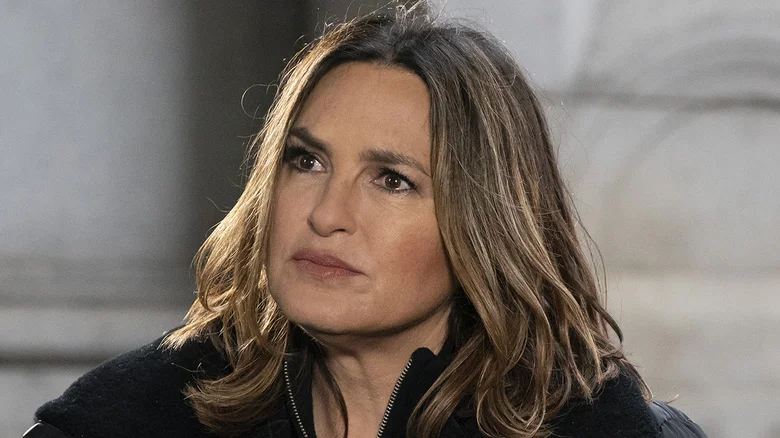
For more than a quarter of a century, Law & Order: Special Victims Unit has done something almost unheard of in modern television — it has remained relevant, gripping, and culturally influential across multiple generations of viewers. Spanning 27 seasons and counting, the series has survived cast departures, shifting social conversations, evolving storytelling styles, and an ever-changing television landscape.
But if you ask longtime fans why the show still works — why it still matters — most will give you the same answer:
Because of Olivia Benson.
More than just a character, Benson is the emotional backbone, moral compass, and human heart of the series. She’s the thread that ties decades of storytelling together. She’s the one constant in a world where everything else changes.
And without her, it’s hard to imagine SVU lasting even half as long as it has.


A Character Who Became the Soul of the Show
When SVU premiered in 1999, it was designed as a procedural — a crime-of-the-week drama focused on particularly sensitive and often disturbing cases. Like its parent series, it was built on structure, realism, and storytelling efficiency.
But something unexpected happened.
Audiences didn’t just follow the cases — they connected deeply with the detectives investigating them. And among them, Benson stood out immediately.
Portrayed by Mariska Hargitay, Benson wasn’t a distant investigator or emotionally detached professional. She listened. She empathized. She fought — not just for justice, but for healing.
Her compassion didn’t weaken her authority. It defined it.
That balance — strength without coldness, empathy without fragility — made her unlike any procedural lead viewers had seen before.
The Evolution of Benson Mirrors the Evolution of the Series
One of the greatest reasons for SVU’s longevity is its ability to grow — not just in storylines, but in emotional depth and social awareness.
And that growth is embodied in Benson herself.
Over 27 seasons, audiences have watched her transform from a young detective learning the realities of trauma to a commanding leader shaping the future of the unit. Her journey hasn’t been smooth or simple. She has faced personal loss, psychological strain, moral dilemmas, and professional pressure — all in full view of the audience.
That long-form character development is rare in procedural television. Most shows reset each week. SVU didn’t.
Instead, it allowed Benson to evolve in real time — aging, learning, healing, and sometimes breaking — just like the people watching her.
Her story became a living timeline of emotional resilience.
Emotional Authenticity in a Genre Known for Detachment
Crime procedurals traditionally focus on solving puzzles. They emphasize evidence, interrogation, and resolution.
But Benson changed the emotional framework of the genre.
She represents what happens after the case ends — the human aftermath. The fear. The trauma. The recovery.
Her interactions with survivors are not treated as narrative filler. They are central to the show’s identity. She listens when others rush. She validates when systems fail. She stands firm when justice feels incomplete.
This emotional authenticity gave SVU something many crime shows lack: psychological realism.
Viewers don’t just watch crimes get solved. They watch people struggle to rebuild their lives — guided, often, by Benson’s unwavering presence.
A Cultural Symbol of Advocacy and Strength
Over time, Benson’s role has expanded beyond fictional storytelling. She has become a cultural symbol — one associated with advocacy, empathy, and survivor empowerment.
Her influence reflects larger societal conversations around trauma, justice, and accountability. As public awareness about sexual violence and victim rights has grown, Benson has remained a consistent figure representing belief, support, and perseverance.
This alignment between character values and real-world discourse has helped the show stay relevant across decades.
While many long-running series become nostalgic relics, SVU continues to feel urgent and contemporary — largely because Benson’s worldview evolves alongside the culture itself.
Stability in a Changing Cast
Television longevity often depends on continuity. Over 27 seasons, SVU has seen numerous cast changes. Detectives come and go. Commanders retire. Partners shift.
But Benson remains.
Her presence gives the show narrative stability — a familiar emotional anchor that welcomes both longtime viewers and new audiences.
When fans return after years away, she’s still there.
More experienced. More layered. But still unmistakably herself.
That sense of continuity builds trust — something extremely rare in long-running television franchises.
Leadership That Feels Earned, Not Assigned
Benson’s rise to leadership is another key factor in the show’s success.
Her authority wasn’t granted suddenly for dramatic effect. It was built slowly — through years of experience, sacrifice, and growth.
Viewers witnessed every step of her journey: the doubts, the mistakes, the resilience. When she finally became a commanding figure within the unit, it felt deserved.
That narrative patience created emotional investment. Audiences weren’t just watching a character in power — they were watching someone who earned it.
And that makes her leadership deeply compelling.
The Vision Behind the Character
Behind every iconic television figure is creative vision. In Benson’s case, that vision comes from series creator Dick Wolf.
Wolf built SVU to explore crimes that demanded emotional intelligence as much as investigative skill. Benson embodies that philosophy perfectly.
She represents the idea that justice is not only about solving cases — it’s about recognizing humanity.
That foundational concept gave the show a thematic identity strong enough to sustain decades of storytelling.
Audience Loyalty Rooted in Emotional Connection
Long-running shows survive because viewers form habits. But SVU survived because viewers formed emotional bonds.
Fans didn’t just tune in weekly — they grew alongside Benson. They watched her endure hardship, experience vulnerability, and maintain strength.
That emotional continuity creates something more powerful than entertainment: relationship.
And once audiences feel connected to a character in that way, they don’t simply stop watching. They stay — year after year.
Why No Replacement Could Ever Work
Some television shows reinvent themselves with new leads. Others shift focus entirely.
But Benson is not interchangeable.
She represents decades of emotional history — for the show and for the audience. Replacing her wouldn’t feel like a natural evolution. It would feel like a rupture.
That’s the clearest sign of her importance.
When one character becomes inseparable from a show’s identity, longevity is no longer just about storytelling — it’s about presence.
The Human Center of a Procedural Machine
Procedural shows operate like engines: structured, predictable, efficient.
Benson is what makes SVU feel human instead of mechanical.
She transforms formula into feeling. She turns investigation into empathy. She converts justice into healing.
And that emotional center is what keeps viewers coming back — not just for answers, but for meaning.
The True Legacy of Olivia Benson
Twenty-seven seasons is more than a television milestone. It’s a cultural phenomenon.
And at the center of that phenomenon stands a character who redefined what strength looks like on screen.
Not invincibility — but endurance.
Not detachment — but compassion.
Not perfection — but persistence.
Benson isn’t just the face of SVU. She is the reason it continues to resonate, evolve, and endure.
In a television era defined by constant change, she remains the one constant that matters most.
And that is why Law & Order: SVU is still here — 27 seasons later — and still going strong.