For a show that has survived for more than a quarter-century, Law & Order: Special Victims Unit is still doing what network TV legends are supposed to do: it keeps getting renewed, it still anchors NBC’s Thursday schedule, and it remains widely recognizable enough to pull in millions of viewers. NBC still describes it as television’s longest-running primetime drama, and the series was renewed for Season 28 in April 2026. But the more interesting story is not whether SVU can survive. It is why so many longtime viewers say it no longer feels like their show.
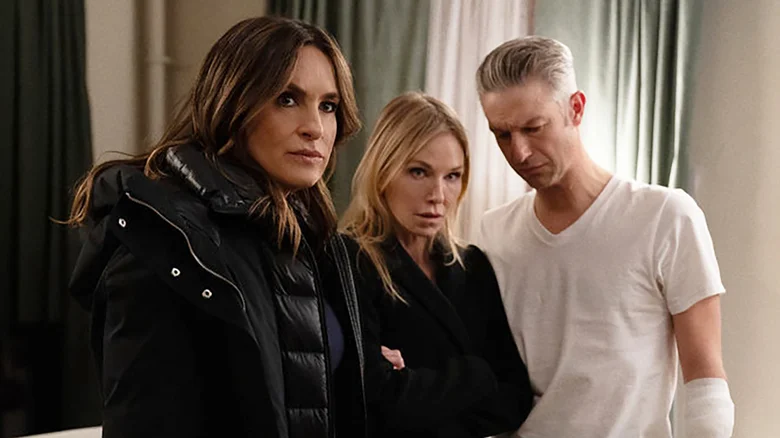
The simplest answer is that the show has changed its relationship with its audience. Longtime fans did not just tune in for cases; they tuned in for a familiar emotional ecosystem: Benson, Stabler, Fin, Rollins, Carisi, the rotating supporting squad, and the sense that each return visit to Manhattan’s Special Victims Unit would deepen those relationships a little more. Over time, that ecosystem has thinned out. Cast turnover has become routine, the ensemble has been reshuffled, and even the show itself is now openly talking about being closer to the end than the beginning. That is not a recipe for easy comfort viewing. It is a sign that the series knows its own age, and so do the people watching it.
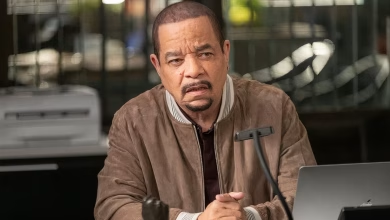
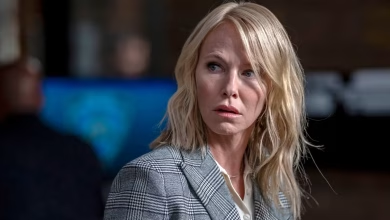
The most visible crack in the foundation is the cast churn. In 2025, NBC’s long-running procedural lost two regulars after Season 26: Octavio Pisano and Juliana Aidén Martinez were both set to leave, even before the next season was fully underway. That followed an earlier rupture that never really healed: Kelli Giddish’s departure in 2022, which Ice-T later said blindsided the cast and which fans pushed hard to reverse. Giddish eventually came back, but even that return became part of the problem because it forced the show into a new budget and screen-time balancing act. Ice-T said the production could not keep both him and Giddish full-time “as far as budget-wise,” so he would appear only part-time in Season 27. For a show built on ensemble familiarity, that kind of instability matters. It makes the room feel less like a working squad and more like a rotating cast list.
That instability is not just a business issue; it changes the viewing experience. A procedural can survive almost anything if the weekly formula still feels alive, but SVU now often feels like it is replacing people around the same core machinery rather than evolving as a living drama. Ice-T’s reduced screen time, the departures of newer regulars, and the continued return of guests and familiar faces all signal a show trying to preserve itself economically rather than dramatically. Even when that is sensible, it can read to fans as creative contraction. The series is still making episodes, but the sense that the whole ensemble matters equally has weakened.
Then there is Olivia Benson, who has become both the beating heart of the show and, for some longtime viewers, part of the reason it feels narrower than it used to. New showrunner Michele Fazekas said she wanted to bring back some of the energy from Seasons 3 through 7, and she also made clear that she was not pretending the show could go on forever without acknowledging its own lifespan. She said Season 27 was built around the idea that Benson is “closer to the end than the beginning,” and that the season should answer the question of why Benson is still doing this. Her answer was essentially that Benson does it because she cannot do anything else. That is a powerful character thesis, but it also tells you something important about where the series is now: it is reflecting on its legacy more than it is expanding it.

Fazekas’s comments matter because they reveal the show’s self-awareness. She is the first female showrunner in the series’ history, and part of her pitch was to “bring some of that back” from earlier seasons, a tacit admission that even insiders could feel a drift away from the show’s original rhythm. The Season 27 finale, she said, was designed to end with the squad together, around the core group, with no extra dialogue needed. That is a nice sentiment, but it also underlines how much the series now leans on nostalgia for cohesion. Older fans are not simply asking for more of the same; they are asking for the emotional momentum that once made the same formula feel fresh. When the show starts framing itself as an archive of itself, some viewers stop experiencing it as a drama and start experiencing it as a museum exhibit.
The Benson-Stabler relationship has also become a double-edged sword. For years, the franchise has fed viewers just enough chemistry, near-misses, and emotional aftermath to keep the “Bensler” conversation alive, while withholding the payoff that many fans wanted. Mariska Hargitay recently revealed that she and Christopher Meloni actually filmed a kiss for SVU, only for Dick Wolf to veto it in favor of the near-kiss that aired. Hargitay said she was devastated when Meloni originally left the franchise, and she has spoken repeatedly about the depth of their characters’ connection. That should have been the kind of long-running romantic tension that gives a series staying power. Instead, after years of teases, it has become for many fans an emblem of perpetual delay: a promise the show keeps touching without ever fully delivering.
The cancellation of Law & Order: Organized Crime in 2026 only sharpened that frustration. Meloni’s return to the franchise in 2021 had revived hopes that the writers would finally resolve the Benson-Stabler dynamic in a meaningful way, but the spinoff’s five-season run has now ended, and Hargitay herself called the loss devastating. That means one of the franchise’s most reliable cross-show engines is now gone, just as it was helping keep old viewers emotionally invested. For fans who had waited years for a payoff, the cancellation does not just close a side chapter. It closes one of the last remaining pathways to a major emotional resolution the franchise kept hinting at and postponing.
There is also a quieter reason longtime viewers drift away: the show has become too aware of its own legacy to surprise them. When SVU still feels like it is solving the same kinds of cases with the same moral seriousness but less of the old ensemble unpredictability, the viewing contract changes. That was partly visible in the ratings context. The series is not collapsing: its Season 25 premiere drew 5.6 million viewers and jumped 29 percent from the final four episodes of Season 24, and Nielsen’s first-month 2026 multiplatform ranker put SVU at 7.35 million total viewers. In other words, the audience is still there. What has changed is the depth of attachment. A show can remain commercially durable while losing the sense that each episode is an event. That is often how long-running hits age out of their original fandoms.
That helps explain why the fan conversation around SVU feels sharper than the numbers alone suggest. The audience may still be large, but it is not necessarily the same audience, and the people who have been there from the beginning are the ones most likely to notice when the show’s center of gravity shifts. They see the budget trims, the cast rotation, the increasingly Benson-centered storytelling, the acknowledgments that the end is in sight, and the endless delay around the franchise’s most famous unresolved relationship. None of those changes is catastrophic on its own. Together, they create a feeling that the series is still functional but less emotionally generous than it used to be.
That is why “losing longtime fans” is probably the wrong phrase if it suggests a sudden collapse. What SVU is really losing is not attention so much as trust. Older viewers once trusted the show to preserve its ensemble, to reward long memory, and to move character relationships forward in ways that felt earned. Now the franchise often feels like it is preserving the brand first and the drama second. The series still works as television, and NBC has every reason to keep it on the air. But for fans who grew up with Benson, Fin, Munch, Stabler, Rollins, and the rest, the real loss is simpler and more painful: the show that once felt like a living institution now sometimes feels like it is mostly managing its own afterlife.
The real reason Law & Order: SVU is losing longtime fans, then, is not one dramatic mistake. It is the slow accumulation of small ones: cast turnover that weakens the squad, budget decisions that thin the ensemble, a Benson-centric era that can feel less spacious than the old show, and a franchise that keeps hinting at emotional payoffs while withholding them. The show is still alive, still popular, and still renewing. But the emotional contract that made it must-watch television for so many years has changed. That, more than any single plot twist or ratings dip, is what longtime fans are feeling when they say the show is not the same anymore.